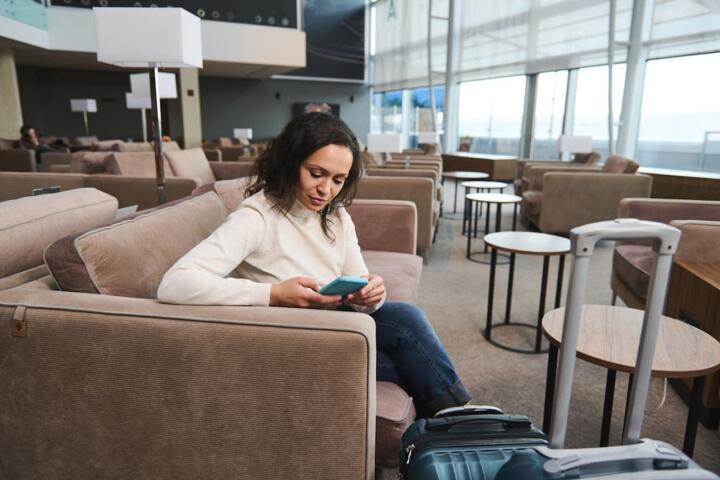
This is an illustrative scenario designed to explain the decision process; it is not presented as a documented personal experience.
Context: A frequent traveler who drives to airports is considering an airport lounge membership. The traveler’s goal is not comfort for its own sake, but whether the membership can be justified financially over a year when combined with typical airport-related costs (for example, parking and ground time) and the traveler’s own habits (for example, how often they actually arrive early enough to use the lounge).
Goal: Determine whether a lounge membership is likely to “save money” over one year, and under what conditions the answer changes. In an automotive context, the analysis also considers how driving behavior and airport timing can affect the overall cost picture (for example, whether the traveler can reduce paid parking time by arriving earlier or later, and whether lounge use changes meal purchases).
Constraints and risks:
- Usage uncertainty: Lounge value depends on frequency and timing. If the traveler rarely has a long enough wait, the membership may not be used enough to offset the fee.
- Opportunity cost: Even if the lounge reduces food purchases, the membership fee is fixed. If the traveler would otherwise buy cheaper options (or bring food), the “savings” may not materialize.
- Access limitations: Lounges may have capacity limits, restricted hours, or access rules that vary by airline, terminal, and membership tier. These factors can reduce effective usage.
- Automotive cost interactions: Driving to the airport introduces costs like parking, tolls, and fuel. Lounge access does not directly change fuel economy, but it can influence when the traveler arrives and how long the car sits in paid parking.
Initial plan and why it seemed reasonable: The traveler’s initial plan is to treat the lounge membership like a “subscription ROI” problem. The reasoning is straightforward: if the traveler uses the lounge often enough, the avoided costs (for example, paying for meals or drinks inside the lounge) could exceed the membership fee. Because the traveler drives to the airport, the plan also checks whether lounge use changes parking duration enough to matter.
At this stage, the plan seems reasonable because many people overestimate how often they will use a benefit. A structured approach helps avoid that common bias by forcing the traveler to quantify usage and compare it to the fixed membership cost.
What was done (scenario evaluation): Since the topic does not include documented personal facts (specific membership price, exact travel frequency, or measured parking/fuel changes), this case study uses a composite evaluation framework rather than claiming a real outcome.
The traveler (composite) follows these steps over a year:
- Define the “value components” that could plausibly change: (a) avoided purchases in the lounge, (b) avoided purchases outside the lounge due to timing, and (c) any parking-time reduction that results from arriving at a different time.
- Track lounge access events: Count each trip where the traveler actually enters the lounge for meaningful time (not just a brief pass-through). This matters because “having access” is not the same as “using it.”
- Estimate avoided spend conservatively: Instead of assuming every lounge visit replaces a full meal, the traveler estimates a range based on typical behavior: sometimes the traveler would have bought a snack or drink; sometimes they would have eaten before arriving; sometimes they would have waited without buying anything.
- Check parking-time sensitivity: The traveler notes whether lounge use changes arrival timing. If the traveler still parks for the same duration regardless of lounge access, then parking costs likely do not change and should not be counted as savings.
- Separate “savings” from “comfort”: The analysis explicitly labels comfort benefits (quiet space, seating, refreshments) as non-financial. The question is only whether the membership fee is offset by avoided costs.
Relevant automotive mechanisms that affect the story:
- Parking duration is the lever, not fuel economy: Driving to the airport incurs fuel and wear, but lounge membership does not change the physics of fuel consumption. The only automotive-related cost that lounge access could realistically influence is how long the car is parked (for example, if lounge access changes when the traveler chooses to arrive).
- Vehicle idling and waiting time: If the traveler uses the lounge to avoid idling in the car while waiting, that could reduce unnecessary engine run time. However, this is highly situational and should not be assumed without evidence. For a deeper understanding of vehicle wear and maintenance planning, see how to think about maintenance intervals for high-mileage drivers.
- Battery health during long parking periods: Airport parking can involve long stationary periods. Lounge membership might indirectly change how long the car sits, but the effect is uncertain. If you want a guide on what to watch when a vehicle sits for extended periods, review battery health basics for vehicles that sit between trips.
Complications, trade-offs, and failed assumptions:
- Assumption: “I’ll use it every time.” In practice, lounge use can be limited by flight schedules, terminal changes, or capacity. If the traveler’s flights are often boarding quickly or the traveler arrives too late, effective usage drops.
- Assumption: “Every visit replaces a paid meal.” Many travelers already eat before arriving or buy cheaper alternatives. If the avoided spend is smaller than expected, the membership may not break even.
- Trade-off: membership tiers and access rules: Some memberships require specific airline partners or credit-card-linked access. If access is inconsistent, the traveler may pay for a benefit they cannot reliably use.
- Automotive trade-off: parking strategy may dominate: If the traveler chooses a parking option based on convenience rather than duration, lounge access may not reduce parking costs. In that case, the membership’s “savings” must come primarily from avoided lounge purchases.
Result (what could reasonably be expected in this scenario): Because no documented personal facts are provided, the most defensible conclusion is conditional. In a composite one-year evaluation, the membership is more likely to “save money” only if:
- the traveler actually uses the lounge frequently enough (high effective utilization, not just theoretical access),
- the traveler would otherwise purchase lounge-priced food and drinks regularly, and
- any parking-time changes are real and meaningful (not assumed).
Conversely, the membership is less likely to save money if lounge use is sporadic, if the traveler often eats before arriving, or if parking costs remain unchanged. In those cases, the membership may still be worthwhile for comfort, but not for financial savings.
What changed (decision logic that readers can apply): The key “change” in the decision process is moving from a vague expectation of savings to a measurable break-even model. Instead of asking, “Will I like the lounge?” the traveler asks, “How many usable lounge visits do I realistically have, and what portion of my typical airport spend would those visits replace?”
Lessons and a reusable checklist:
Broadly transferable lessons:
- Count effective usage, not access. A membership only pays off if you can and do use it during your actual travel patterns.
- Estimate avoided spend conservatively. If you sometimes bring food or buy cheaper options, your “savings per visit” is lower than you might think.
- Don’t double-count unrelated costs. Lounge membership does not automatically reduce fuel economy or vehicle operating costs; only include automotive-related savings if you can plausibly link them to parking duration or reduced idling.
- Separate financial ROI from comfort. If the membership is mainly for convenience, treat it as a discretionary expense rather than a “savings” tool.
What depends on the specific vehicle, market, climate, and use case:
- Airport and lounge pricing: The break-even point depends on local lounge pricing and what you would otherwise buy.
- Parking pricing structure: If parking is priced by day or flat rate, lounge-driven timing changes may not reduce cost.
- Vehicle and climate: Long airport parking can affect battery health and other factors, but the magnitude varies by climate and vehicle design. Use a pre-trip checklist for vehicles before long parking periods to avoid assumptions.
Reusable checklist (printable logic):
- List the membership fee and any required tier/eligibility conditions.
- Estimate your realistic lounge entry frequency based on flight schedules and arrival times.
- For each lounge visit, estimate a conservative “avoided spend” range (snack/drink vs full meal replacement).
- Check whether lounge use changes parking duration or idling time; include only changes you can justify.
- Compute a break-even threshold: membership fee ÷ (avoided spend per usable visit).
- Review after a trial period (or after collecting enough trips) and decide whether to keep or cancel based on utilization, not expectations.
Related guides (for the automotive side of planning):
- How to think about maintenance intervals for high-mileage drivers
- Battery health basics for vehicles that sit between trips
- A pre-trip checklist for vehicles before long parking periods
- Buying checklist: choosing a parking strategy that matches your travel cadence
Bottom line: In most real-world cases, an airport lounge membership only “saves money” if your effective lounge usage is high and your avoided purchases are substantial. For drivers, the automotive-related savings are usually indirect and limited—parking duration and idling habits matter more than fuel economy. Treat comfort as a separate value category, and use a break-even model to avoid overestimating benefits.