Why Air Fryers Took Over
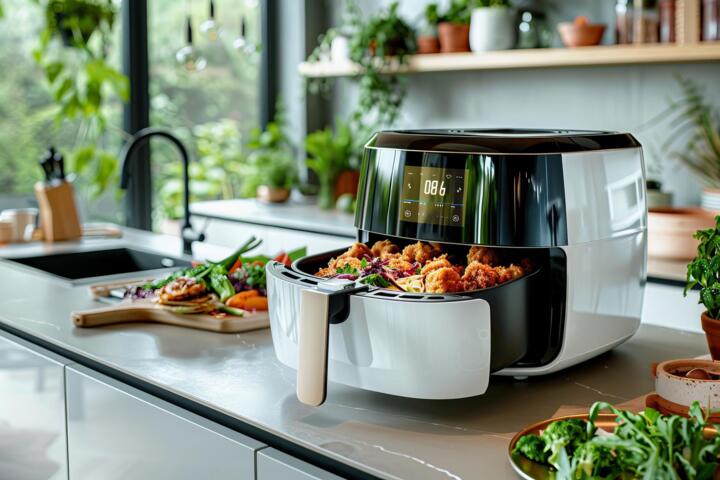
The air fryer spread fast because it promised one thing: crisp food without a full oven. In 2023, U.S. retail sales passed 30 million units, according to appliance market trackers. That kind of volume usually signals a shift in everyday cooking habits, not a passing trend.
People started using it for fries, chicken wings, frozen snacks, even reheating pizza. A 10-inch basket feels small, but it changes routine faster than expected. One appliance replaces multiple pans, at least in theory.
Still, counter space is limited in most homes. The average kitchen countertop in urban apartments sits around 4–6 square meters. That number matters more than marketing claims.
Some kitchens feel crowded on day one.
Then the air fryer arrives.
Buyers expect transformation. What they get is another box that needs cleaning, storage thinking, and a plug that competes with everything else.
Where The Friction Starts
The first problem appears after the novelty fades. You stop using it daily. It stays visible.
Many users underestimate cleanup time. A basket with grease buildup takes longer than expected, especially after breaded foods. What looked like “quick cooking” becomes “quick cooking plus scrubbing.”
Another issue is duplication. If you already own an oven, toaster oven, or convection setting, the overlap is real. Three devices doing similar work do not multiply efficiency.
Counter clutter increases quietly.
Skip impulse placement. It never ends well.
Heat output also surprises people. Air fryers vent warm air into small kitchens, which matters during summer cooking cycles. In tight spaces, temperature buildup changes how comfortable the kitchen feels after 15 minutes of use.
Then there is noise. Not loud like a blender, but constant fan sound that sits in the background. It becomes noticeable when used early in the morning or late at night.
That detail gets ignored in store demos.
How To Decide If It Stays
Measure counter footprint first
Most air fryers range between 28–35 cm in width. That sounds small until you place it next to a coffee machine and cutting board. Space disappears quickly.
If your counter is under 60 cm deep, placement becomes a daily inconvenience rather than a convenience. You start moving it around, which defeats the purpose of quick cooking.
Measure twice. Regret once.
Track weekly usage honestly
Usage drops after excitement fades. Many households report going from daily use to once or twice per week within two months.
If it’s used fewer than 8–10 times per month, the counter space trade starts looking questionable. That frequency matters more than recipe variety.
One appliance should earn its footprint.
Compare with oven efficiency
A convection oven often produces similar results for larger portions. Air fryers win on speed for small batches, usually under 1 kg of food.
If you regularly cook for more than two people, batch limitations become obvious. Multiple rounds of cooking remove time savings.
In that case, skip duplication. The oven already wins volume.
Check cleaning tolerance
Some users clean the basket immediately. Others delay it, which leads to residue buildup and stronger odors over time.
Non-stick coatings help, but they are not self-cleaning. Dishwasher compatibility exists on many models, yet not all baskets fit standard racks.
Cleanliness decides longevity.
Test heat and ventilation
Air fryers push hot air out from rear vents. In compact kitchens, that airflow can affect nearby objects like spice racks or hanging towels.
Leave at least 10–15 cm clearance behind the unit. Without that buffer, heat circulation becomes uncomfortable during longer cooking cycles.
Small gap, big difference.
Weigh replacement value
If the air fryer replaces takeout habits even twice per week, it may justify its space through cost savings. A single takeaway meal often costs €10–€18 in most European cities.
But if it only replaces oven use, the value gap shrinks. You are swapping tools, not reducing spending.
Replacement, not addition, is the real test.
Real Kitchen Outcomes
A family of three in Hamburg added a mid-range 5-liter air fryer in early 2024. Initial use was daily for frozen snacks and vegetables. After six weeks, usage dropped to weekends only. The device remained on the counter but stopped influencing weekly cooking decisions.
The result was mixed. Food prep time dropped by about 12 minutes per meal during active use periods. But counter congestion increased enough that the coffee machine had to be moved. That change reduced morning efficiency elsewhere.
Another case involved a single apartment in Berlin. The user replaced oven baking for small meals and reported saving roughly 20 kWh per month in electricity. Still, the appliance was stored inside a cabinet after three months because counter space mattered more than energy savings.
The pattern repeats.
Short-term gain, long-term negotiation with space.
Space Vs Function Table
| Factor | Air Fryer | Oven | Impact |
|---|---|---|---|
| Speed | Fast | Medium | +15 min saved |
| Capacity | Low | High | Batch cooking |
| Space | High use | Built-in | Counter loss |
| Cleanup | Moderate | Varies | Extra step |
Common Mistakes
People buy air fryers assuming they will cook everything faster. That expectation collapses when portion size increases or recipes require multiple batches.
Another mistake is ignoring storage alternatives. If a device is used three times a week, it does not need permanent counter placement. Cabinets exist for a reason.
Some users also overload the basket. This blocks airflow and leads to uneven results. Food ends up partially crisp, partially steamed.
Skip stacking food.
Another issue comes from skipping preheating guidance. Some models require 2–3 minutes of warm-up time. Ignoring that step changes texture more than expected.
Finally, many households keep it plugged in constantly. That increases visual clutter and encourages casual overuse rather than planned cooking.
Convenience turns into noise.
FAQ
Does an air fryer replace an oven?
Not fully. It replaces small batch cooking but struggles with large meals. Most households still rely on ovens for volume-based cooking like roasts or baked trays.
How much counter space does it need?
Typical models require a footprint of about 30 cm by 30 cm, plus rear ventilation space. In smaller kitchens, that equals the area of a cutting board plus margin.
Is it cheaper to run than an oven?
Yes for small meals. Air fryers use less electricity per cycle, often reducing energy use by 20–40% compared to full oven heating for similar portions.
Why do people stop using it?
Loss of novelty, cleaning effort, and limited capacity lead to reduced usage. Many households shift back to ovens after initial experimentation.
What foods work best?
Frozen foods, small chicken portions, vegetables, and reheated items perform well. Wet batters and large roasts perform poorly in most models.
Author's Insight
I have seen kitchens where the air fryer becomes the most-used appliance and others where it turns into permanent counter furniture. The difference usually comes down to space discipline, not cooking skill. Devices do not create habits on their own.
If counter space already feels tight, the decision is less about cooking performance and more about visual and physical pressure in the kitchen. The wrong appliance makes even simple routines feel crowded...
Summary
An air fryer earns its place only when usage is frequent and portion sizes are small. It speeds up cooking, but it also demands counter space, cleaning time, and behavioral adjustment. Without consistent use, it becomes a static object competing with more flexible kitchen tools.
Measure space first, track usage honestly, and treat it as a replacement tool rather than an addition. If it does not actively remove friction from your cooking routine, it is not earning the space it occupies.